The Up-coming November 4, 2014 Election
Three important matters have been discussed by BNC since our last eNEWS. These are:
- On August 2, 2014 at a General Meeting of BNC (to which all consulting neighborhoods were invited), several November ballot measures were discussed. Those in attendance voted to make two endorsements in the November 4, 2014 election:
- On August 26, an e-mail message was received from a resident who does not agree with BNCs endorsements on Measures R and S. The complaint was that “BNC Makes these endorsements on behalf of the neighborhood groups that appear on BNC’s website, yet I am a member of CENA and I was not asked for my opinion on these two measures.” The message’s author believes that people in neighborhood groups “don’t realize that BNC is speaking for them and for their neighborhood group.” “It isn’t fair and it isn’t democratic.”
- On August 30, attendees at the next duly noticed General Meeting again discussed the endorsement issue and the opinion raised in #2 above. There was no change in BNCs endorsement decision, but it was agreed that BNC should make it clear that this was the decision of those who attended the General Meetings — that BNC does not speak for our consulting neighborhood groups, that it would be impossible for everyone in any neighborhood to agree on everything and that BNC provides a forum in which people can participate in civil conversation about neighborhood issues with the goal that this conversation will lead to resolution of problems and a stronger neighborhood voice in City decisions. It was unanimously agreed that the structure of how BNC arrives at action decisions will be discussed further at our next General Meeting.
In summary, the following reflects the results of our discussions:
- Berkeley Neighborhoods Council will NOT support or oppose candidates for election.
- Berkeley Neighborhoods Council will with a 2/3s (67%) of those present at a duly noticed General Meeting take a position on ballot measures that have a direct impact on neighborhoods within Berkeley. Berkeley Neighborhoods Council will take such actions sparingly.
- In making a ballot measure to support/oppose, Berkeley Neighborhoods Council will
- Issue a written statement as to the reasons for taking such a position, and
- Include in the written statement that the action to support/oppose does NOT mean that this action reflects the opinions of our consulting neighborhood organizations, but it does reflect the opinions of at least 67% of those present at a General Meeting to which all consulting neighborhood organizations were invited.
- That any election activities by our consulting neighborhood organizations or eNEWS subscribers, whether in accordance with or opposed to BNC’s action, is entirely up to each neighborhood group or individual.
- Berkeley Neighborhoods Council will begin the process of surveying all our consulting neighborhoods regarding:
- the listing of their names on our website, eNEWS, correspondence, etc.
- our support/oppose policy and procedures, and
- their issues and concerns
The following are statements issued by BNC in support to their decision to support Measure R, the Green Downtown and Public Commons Initiative and to oppose Measure S, the City Council’s Redistricting Measure. Each Statement contains the notation that BNC does not speak for our consulting neighborhood associations. They are printed separately so that any neighborhood organization or individual may reproduce them and distribute them, if they so desire. No permission to reproduce or distribute these statements is necessary.
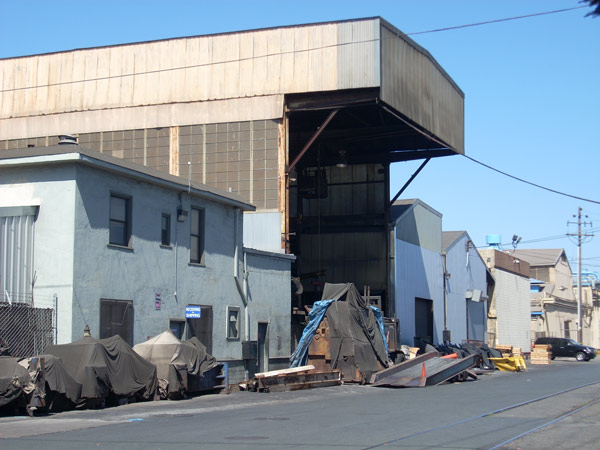 This month’s post is written by a member of a neighborhood in West Berkeley. It has not been edited. It’s about the long-standing issue of air pollution in that area caused not only by the I-80 freeway, but also by a Berkeley business, Pacific Steel Casting (PSC). Air pollution is a major health issue that concerns not only the existing homes, schools and child care facilities located in West Berkeley but also future residents as the pressure to develop more and more new housing in that area increases. This article also highlights the complex issue of how residential and industrial can exist side by side in compact communities such as Berkeley and the urgent need for regulatory agencies, local government, residents and business to work cooperatively to resolve these difficult concerns — not just leave them to fester, year after year. Because of the serious health issues involved, these are not concerns that neighborhoods outside of West Berkeley can shrug their shoulders and declare them to be “Someone Else’s Problems” (SEPs). We are, indeed, in this, all together.
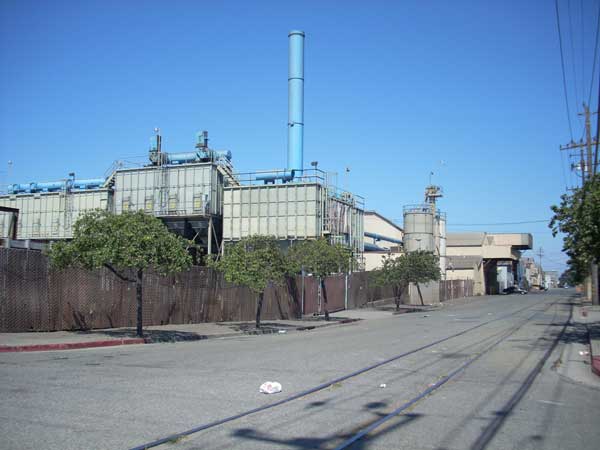 Well, finally when a national newspaper (USA Today), the City’s Community Environmental Advisory Board (CEAC) and Zoning Adjustments Board (ZAB) began to look at permits and ask questions, the problem seemed to come to a head. Unfortunately, to little avail, as decision-makers turned their heads and PSC had its up and downs. There was a downturn in the economy and a series of major mishaps such as changes that brought in management with no foundry experience, employee strikes, a $31 million lawsuit filed by a long-term PSC worker over violations of California labor law (the suit was settled for $5.4 million to be paid to employees — a debt that we understand has not yet been paid, and layoffs of some 200 employees found to be undocumented immigrants, many of whom had been working there for years with invalid or missing social security numbers. Then, PSC filed for bankruptcy and the plant was put up for auction. In late July 2014, according to Dow Jones Daily Bankruptcy, it was sold for $11.3 million (BNC thinks that’s a surprisingly low amount) and a judge in Oakland approved the sale to Speyside Equity, there being no other offers.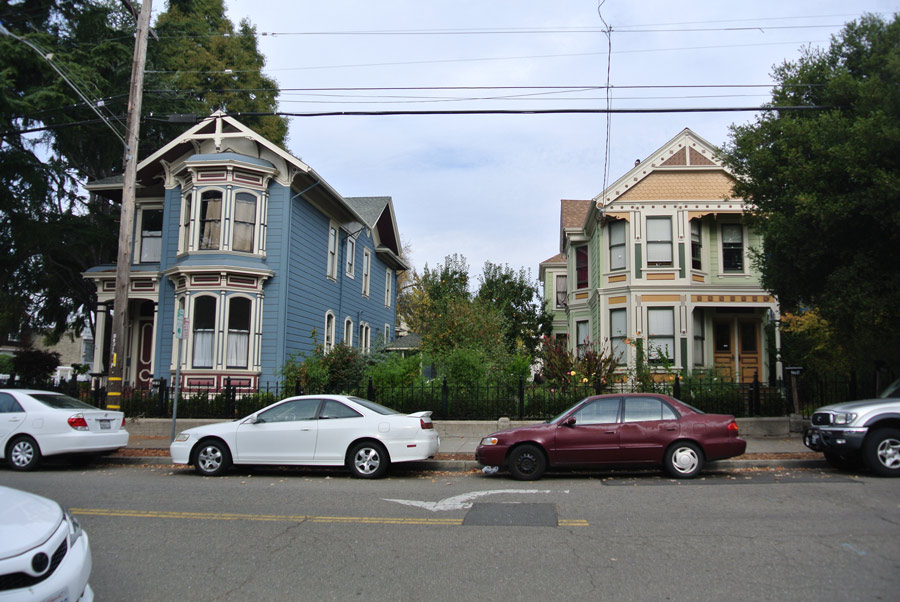
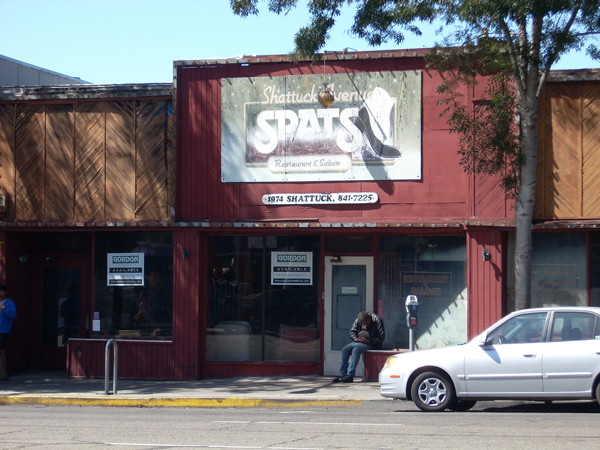 Mark Rhoades, a former high-level city of Berkeley planner, is apparently also involved with the Spats project as well as with other Nathan George projects (he was a presenter of Mr. George’s project at 2404 Warring which the ZAB unanimously approved on July 24, 2014 and at the ZAB hearing for the Blake/Dwight Way project). The developer of the Spats project is 1974 Shattuck, LLC which has opened office space at 1900 block of University Avenue . The person identified as the Agent for this LLC is Terence N. Church of Walnut Creek.
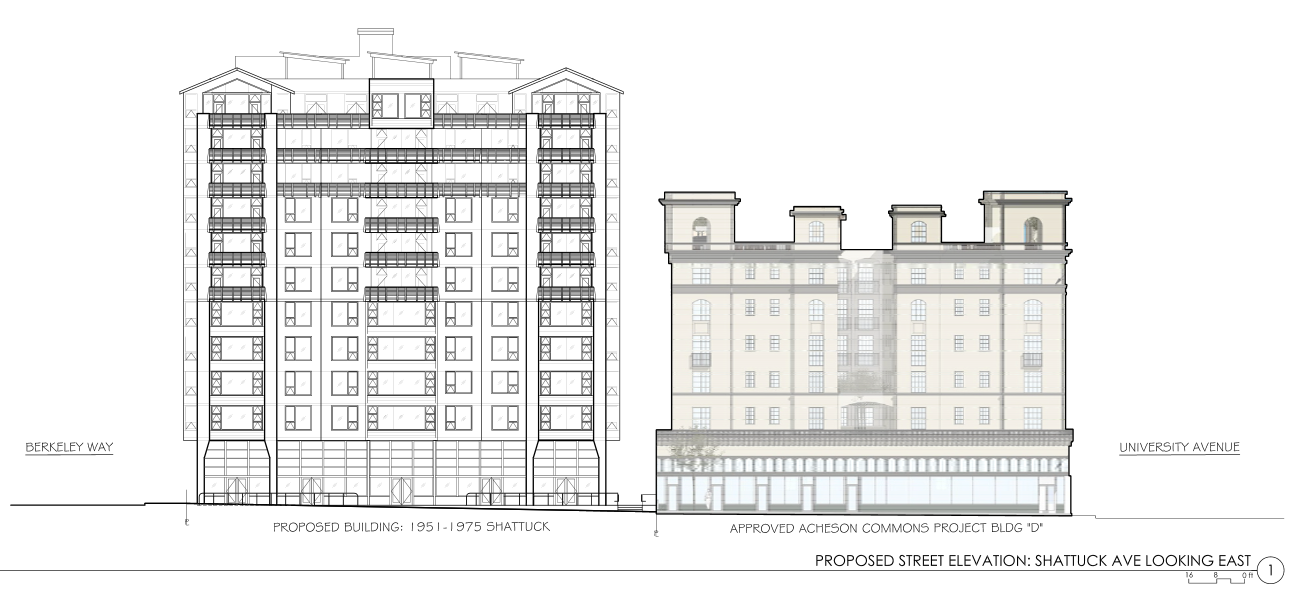 We thought you might be interested to know that the soon-to-be-reopened, renovated Spats is directly across the Street from two of Berkeley’s dense downtown core buildings:
 Readers will recall that Plan Bay Area, a 9-county regional plan that addresses how to provide housing and jobs for a projected increase in population of approximately 2 million more people was adopted last year. The Plan calls for local communities to designate Priority Development Areas (PDAs) that would be eligible for State funding to encourage housing and jobs in neighborhoods near transit lines. To date, around one-hundred seventy of these PDAs, 100 acres or larger, which have been nominated by local governments have been approved by the